In road transportation and logistics operations, trailer axles, as key components connecting wheels and chassis, bearing loads and transmitting power, directly determine the overall vehicle's load-bearing capacity, driving stability, and service life. They are not only the linchpin of the mechanical structure but also bear the heavy responsibility of absorbing shocks, balancing forces, and ensuring safe operation under complex working conditions.
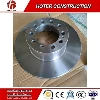
Structurally, trailer axles typically consist of the axle body, wheel hub assembly, bearing assembly, and braking system. The axle body is mostly forged from high-strength alloy steel or machined from seamless steel pipes, possessing excellent bending and torsional stiffness. It maintains geometric accuracy under heavy loads, preventing uneven tire wear or vehicle deviation caused by deformation. The wheel hub assembly is connected to the axle body via precision bearings, allowing the wheels to rotate freely around the axle while effectively transmitting vertical loads and lateral forces to the axle body. The selection and lubrication condition of the bearings directly affect rotational resistance and durability; high temperatures, dust, or insufficient lubrication can all lead to premature failure. The braking system is integrated into the axle end or wheel end. Through the cooperation of brake drums, brake discs, and brake calipers, it achieves driving and parking braking functions, and is a crucial device for ensuring parking safety and downhill speed control.
In terms of working principle, the core function of the trailer axle is load transfer and motion coordination. When the vehicle is carrying cargo, the axle evenly distributes the vertical load on the frame to the left and right wheels. Simultaneously, through the elastic connection between the suspension system and the frame, it buffers the impact of uneven road surfaces, reducing the impact of vibration on the cargo and vehicle body. For semi-trailer tractors, the axle also participates in power transmission-in drive mode, the torque output by the engine is transmitted to the axle via the drawbar and frame, and then converted into forward traction force through the adhesion between the wheels and the ground. The non-drive axle mainly undertakes support and guidance functions, ensuring smooth straight-line driving and controllable trajectory during turns.
The technical performance of axles is reflected in many aspects: load-bearing capacity must meet rated load requirements and maintain structural integrity under dynamic impact; fatigue strength determines its service life under long-term alternating loads; lightweight design can reduce unsprung mass while ensuring strength, improving ride comfort and fuel economy. Furthermore, for different application scenarios (such as long-distance highway transport, construction site short-haul transport, and cold chain transportation), axles have differentiated designs in material heat treatment processes, bearing sealing levels, and brake cooling structures to adapt to special environments such as humid, dusty, extremely cold, or high-temperature conditions.
As transportation equipment develops towards high efficiency and intelligence, trailer axles are also incorporating new technologies. For example, the integration of air suspension with axles enables automatic load adjustment, improving driving stability; intelligent monitoring systems, by deploying sensors in bearings or brake components, can collect temperature, vibration, and wear data in real time, enabling fault warnings and predictive maintenance. These advancements not only extend the service life of axles but also reduce the risk of downtime due to sudden failures.
Overall, although trailer axles appear to be basic components, they occupy an irreplaceable position in the overall vehicle performance. A thorough understanding of its structure, principles, and technical characteristics helps in the scientific selection and standardized maintenance of trailers during transportation operations, thereby ensuring the safety, reliability, and economy of trailer operation and providing solid support for the efficient operation of the modern logistics system.