The speed of a gasoline forklift is a crucial factor that influences its performance and efficiency in various industrial and warehouse settings. As a supplier of gasoline forklifts, I understand the significance of this parameter and its impact on the overall productivity of our customers.
Understanding the Basics of Gasoline Forklift Speed
The speed of a gasoline forklift can be divided into two main categories: travel speed and lifting speed. Travel speed refers to how fast the forklift can move forward or backward on a flat surface, while lifting speed pertains to how quickly it can raise or lower the forks.
Travel speed is typically measured in miles per hour (mph) or kilometers per hour (km/h). The average travel speed of a gasoline forklift ranges from 5 to 12 mph (8 to 19 km/h), depending on the model and its design. Smaller, more maneuverable forklifts may have a lower top speed, while larger, heavy - duty models can reach higher speeds.
Lifting speed, on the other hand, is measured in inches or millimeters per minute. A standard gasoline forklift can have a lifting speed of around 100 to 300 inches per minute (2540 to 7620 mm/min). This speed is essential for quickly loading and unloading goods, which can significantly affect the throughput of a warehouse or distribution center.
Factors Affecting the Speed of a Gasoline Forklift
Several factors can influence the speed of a gasoline forklift.
Engine Power
The power of the gasoline engine is a primary determinant of the forklift's speed. A more powerful engine can generate more torque, allowing the forklift to accelerate faster and reach higher speeds. For example, a forklift with a high - performance V - 8 engine will generally be faster than one with a smaller, less powerful engine.
Load Capacity
The weight of the load being carried by the forklift also affects its speed. When the forklift is fully loaded, it has to work harder to move, which can slow down its travel and lifting speeds. For instance, a forklift carrying a 5 - ton load will move slower than when it is unloaded.
Terrain and Surface Conditions
The type of surface on which the forklift operates plays a significant role in its speed. A smooth, flat floor in a warehouse will allow the forklift to move at its maximum speed. However, rough or uneven surfaces, such as gravel or dirt, can reduce the speed and stability of the forklift. Additionally, slopes and inclines can also impact the forklift's ability to maintain speed, as it has to work against gravity when going uphill and may need to brake when going downhill.
Operator Skill
The skill and experience of the forklift operator can also influence the speed at which the forklift is used. A well - trained operator will know how to handle the forklift efficiently, making smooth starts, stops, and turns, which can optimize the speed of operations. In contrast, an inexperienced operator may make mistakes that slow down the process, such as improper gear shifting or excessive braking.


Importance of Speed in Gasoline Forklifts
The speed of a gasoline forklift is directly related to the efficiency of material handling operations. In a busy warehouse or distribution center, time is of the essence. A faster forklift can complete more tasks in a shorter period, increasing the overall productivity of the facility.
For example, in a large - scale distribution center where thousands of pallets need to be moved daily, a forklift with a higher travel and lifting speed can significantly reduce the time required for loading and unloading trucks. This not only improves the throughput of the facility but also reduces labor costs and increases customer satisfaction by ensuring timely deliveries.
Moreover, speed can also enhance safety in some cases. A forklift that can move quickly and smoothly can avoid potential hazards by getting out of the way of other vehicles or pedestrians in a timely manner. However, it is important to note that speed should always be balanced with safety, and operators should follow all safety regulations and guidelines.
Our Gasoline Forklift Offerings
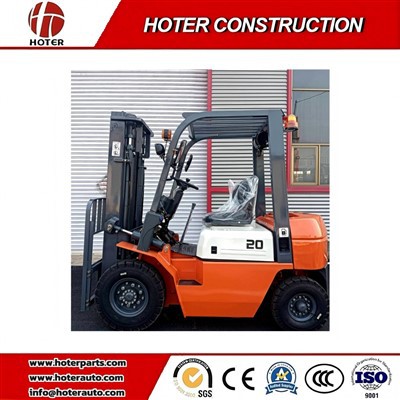
As a supplier of gasoline forklifts, we offer a wide range of models with different speed capabilities to meet the diverse needs of our customers. Our 5Ton Gasoline Forklift is a popular choice for heavy - duty applications. It is equipped with a powerful gasoline engine that provides excellent travel and lifting speeds, allowing for efficient handling of large loads.
This forklift has a travel speed of up to 10 mph (16 km/h), which is sufficient for most industrial and warehouse operations. Its lifting speed is also impressive, with the ability to raise a 5 - ton load at a rate of 200 inches per minute (5080 mm/min). This combination of speed and load - handling capacity makes it an ideal choice for customers who need to move heavy materials quickly and efficiently.
In addition to the 5 - ton model, we also offer smaller and larger forklifts with varying speed and load - capacity specifications. Our team of experts can help you select the right forklift based on your specific requirements, such as the type of materials you need to handle, the size of your facility, and your budget.
Contact Us for Procurement
If you are in the market for a gasoline forklift, we invite you to contact us for more information. Our experienced sales team can provide you with detailed product specifications, pricing, and any other information you may need to make an informed decision. We are committed to providing our customers with high - quality forklifts and excellent customer service. Whether you are a small business looking for a compact forklift or a large corporation in need of a heavy - duty model, we have the right solution for you.
References
- "Forklift Operator's Manual," various manufacturers
- Industrial Material Handling Handbook, multiple editions
- Articles on forklift technology from industry - leading magazines and websites